


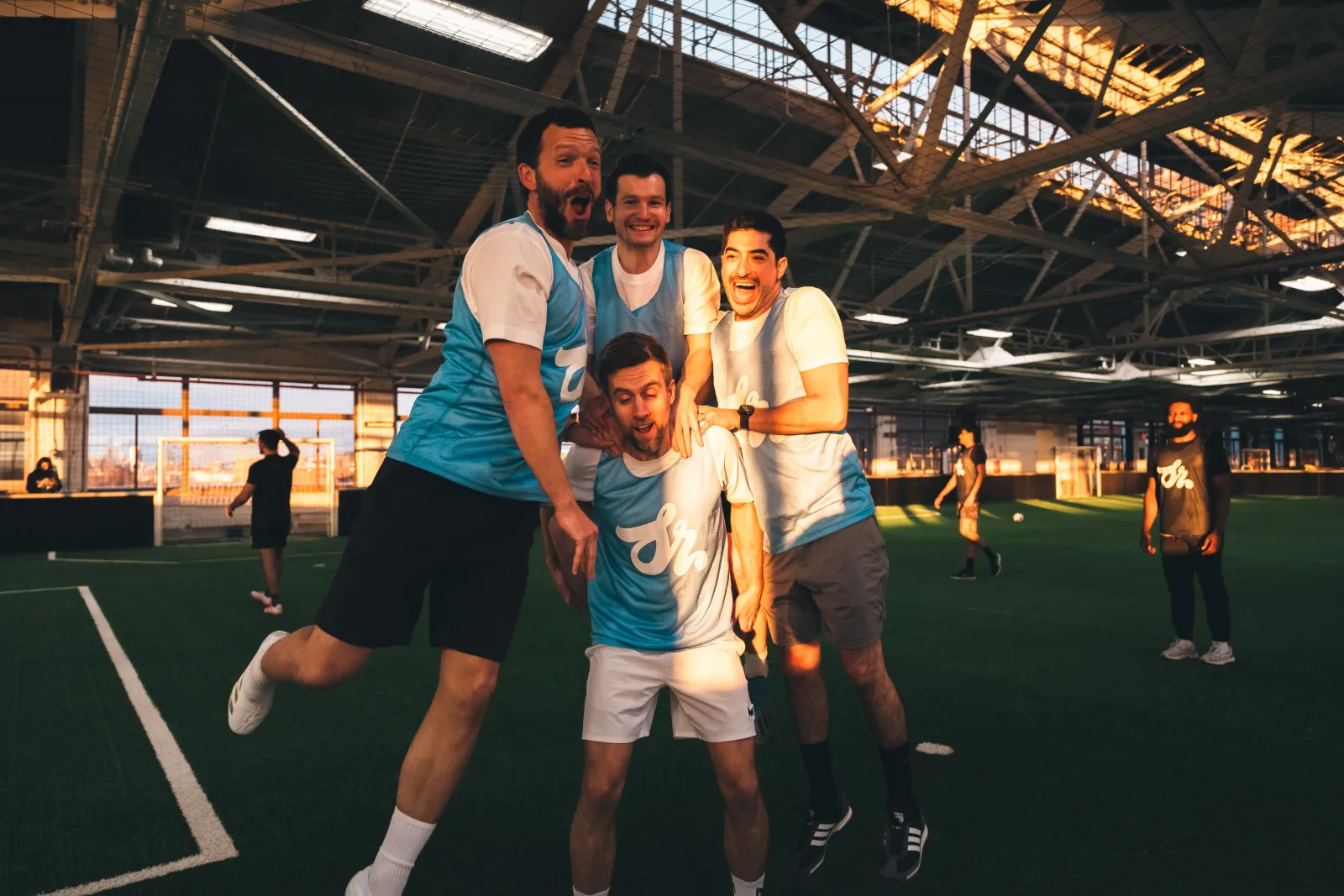

In recent years, fitness habits have evolved. More and more people are moving away from traditional gyms in favor of social sports, a new way to stay active while building connections. At the intersection of sport, leisure, and social life, these formats perfectly match the expectations of modern lifestyles, especially in large cities.
A more motivating and engaging experience
One of the main advantages of social sports is their ability to make physical activity more appealing. Unlike a traditional gym session, which is often individual and repetitive, social sports are built around interaction. Playing a game, joining a team, or participating in pickup soccer creates a collective dynamic that boosts motivation. The fun and competitive aspects make the effort feel less like a chore and more enjoyable.
Not just sport, but social connection
Traditional gyms can sometimes feel impersonal. In contrast, social sports encourage interaction and connection. Whether it’s through an indoor soccer match, a league, or a pickup game, participants share a common experience. This makes it easier to meet new people, build relationships, and develop a real sense of belonging. In urban environments where social interactions can be limited, these moments become especially valuable.
More flexibility, fewer constraints
Social sports easily adapt to busy schedules. Unlike gym memberships that require consistency, it’s possible to join an indoor soccer session or a pickup game without long-term commitment. Formats are often short, accessible, and easy to fit into a daily routine. This flexibility is particularly appealing to young professionals, students, and people with fast-paced lifestyles.
A more accessible and inclusive approach
Social sports focus on participation rather than performance. Regardless of skill level, beginner or advanced, everyone can play and improve at their own pace. The lack of pressure encourages more people to get involved, including those who may feel intimidated in a traditional gym setting.
This inclusivity helps make sports more accessible and enjoyable for a wider audience.
Spaces designed for the experience
Modern sports venues go beyond just the field. Today, many indoor soccer centers offer hybrid spaces that combine sport, relaxation, and social interaction: bars, lounges, screens, music, and more. The goal is to extend the experience beyond the game itself. These venues become true social hubs where people come not only to play, but also to spend quality time.
A growing long-term trend
The popularity of social sports continues to grow, especially in major cities like New York and Montreal. They reflect a deeper shift in expectations: people are looking for complete experiences that combine physical activity, enjoyment, and social interaction. Rather than working out alone, they prefer to share moments, create memories, and integrate sport into their social lives.
In summary, social sports offer a modern alternative to traditional gyms.
More flexible, more human, and more engaging, they are transforming the way people stay active and are becoming the new standard for urban generations.